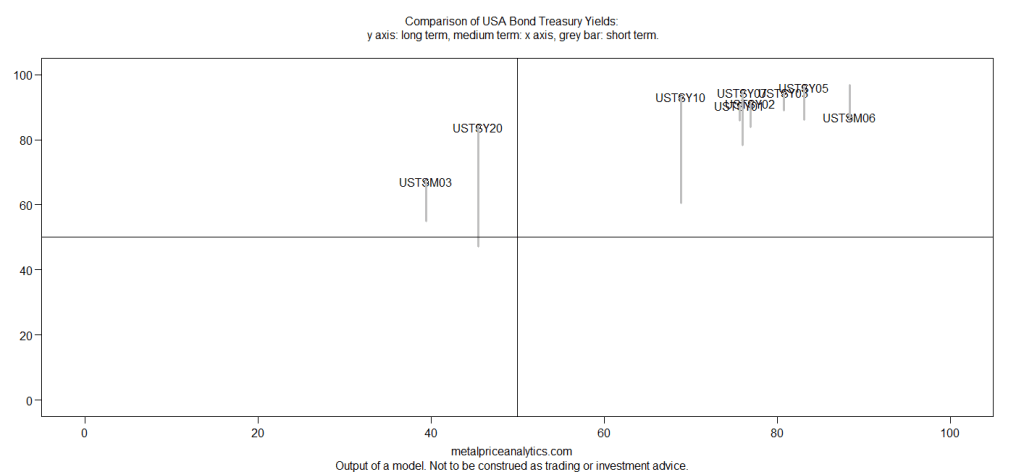
Non‑advice interpretation of the chart
STOCK MARKET — Buy/Sell Implications
Sell / Avoid / Underweight:
- Long-duration growth & unprofitable tech — rising 2Y–7Y yield momentum raises the discount rate on distant earnings; this is the most direct casualty of a belly-led yield move
- REITs, homebuilders, utilities — bond-proxy sectors that compete with cash/short-term yields; the 6M/2Y strength (96.8, 91.2) directly pressures these
- Small caps (Russell 2000) — higher financing costs bite hardest here given greater reliance on floating-rate and short-term debt
- Highly-levered/zombie companies — persistent front-end and belly yield strength keeps refinancing costs elevated
Buy / Favor / Overweight:
- Financials, especially banks — a bear-flattening (not inverting) curve is constructive for net interest margins versus the alternative of curve inversion
- Value and cash-generative equities — lower duration-sensitivity means less valuation compression from rising discount rates
- Energy/commodity producers — tend to be less rate-sensitive and can benefit if the yield move reflects resilient growth/inflation rather than recession fears
Watch for regime change: if USTSY20/USTSY10 begin reaccelerating alongside the belly, that shifts the narrative from “hawkish Fed repricing” to “fiscal/inflation scare” — a much broader equity headwind (valuation compression across the board, not just duration names), similar to August 2023’s bear-steepening episode.
FX MARKET — Buy/Sell Implications
Buy USD against:
- JPY (long USD/JPY) — cleanest transmission from front-end/belly yield strength into a funding-currency short; JPY carry trades are most sensitive to this exact part of the curve
- CHF (long USD/CHF) — same logic; low-yielder funding currency, consistent with CHF also showing broad weakness in your earlier FX table (EURCHF strength)
- AUD, NZD (with caution/tactical only) — commodity/risk-sensitive currencies tend to underperform when US short-rate expectations reprice hawkishly, though these carry more volatility risk than the JPY/CHF trade
Sell USD against / less conviction:
- EUR, GBP — depends heavily on whether ECB/BOE are repricing in the same direction; not a clean USD-strength trade unless you confirm US front-end momentum is outpacing theirs
- EM FX broadly (MXN, ZAR, etc.) — vulnerable to further front-end US yield strength; a sell/underweight for carry-sensitive EM longs until the repricing stabilizes
Highest-conviction trades given this specific data:
- Long USD/JPY — most direct, highest-conviction expression of the front-end/belly momentum
- Long USD/CHF — second cleanest expression, corroborated by cross-asset (EURCHF) signal
- Short AUD, NZD vs USD — tactical, higher-beta expression of the same theme, better suited to shorter holding periods given commodity-currency volatility
Key risk to all of these: this entire read assumes an orderly, policy-driven USD strength regime (belly-led, long end quiet). If USTSY20 starts moving with the belly, USD behavior becomes less predictable — carry trades (USD/JPY, USD/CHF) can reverse sharply as risk-off flows sometimes favor JPY/CHF as havens even against a “stronger” USD backdrop.


